Dr. Brown's
Dr. Brown's is defined by plastic-in-the-milk: the anti-colic vent that makes the brand famous is a multi-piece polypropylene assembly - an insert and reservoir tube - that sits submerged inside the bottle, in direct contact with the milk, on both the plastic and glass models. The best-selling bottle body itself is polypropylene. Everything is BPA-free, but that describes the additive profile, not the material: this is one of the most plastic-in-contact feeding systems sold, and the vent parts must be scrubbed and sterilized constantly.
How clear are their specs?
Dr. Brown's is unusually forthcoming about its construction - it publishes the vent-kit contents (inserts, reservoirs, travel discs) and assembly diagrams showing the parts seated inside the milk chamber, and it names polypropylene and silicone. The plastic-in-contact reality is documented; it's just not framed as a drawback.
Products to avoid
Documented so you know what to skip — each still has a full breakdown and sources.
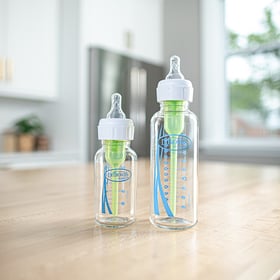
Natural Flow Options+ (Glass)
The glass version of the "#1 pediatrician recommended" bottle - a borosilicate glass body, but the same signature plastic vent still sits submerged in the milk on every feed.
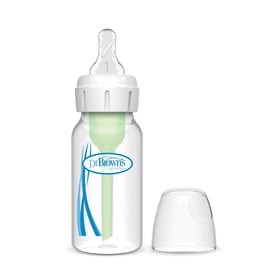
Natural Flow Options+ (Plastic)
The "#1 pediatrician recommended" anti-colic bottle in its default polypropylene form - and the signature internal vent that defines it sits submerged in the milk, making it one of the most plastic-in-contact bottles sold.